With the legal box ticked, Rose began a one-week regimen to prepare for the retrieval, also known as the extraction, collection, and harvest, but those all sound more Handmaid’s Tale to me.
In a woman’s normal menstrual cycle, only one egg matures. With IVF, to increase the odds of success, donors receive daily injections of a concentrated hormone that causes more follicles to develop. They also take ovulation suppression drugs to prevent premature ovulation.
The following week, Rose met with Dr. Sahakian twice to confirm that her body was responding as hoped. Two days before the retrieval, he gave her what’s called a “trigger shot” to induce ovulation. Then for the actual procedure, she was under local anesthesia and a light sedation as he used a long needle to enter the follicles. He had told us that women under 35 produce an average of 10 to 20 eggs. I don’t mean to brag, but Rose gave us a whopping 40. We sent flowers (via Robyn) to thank her and wish her a speedy recovery.
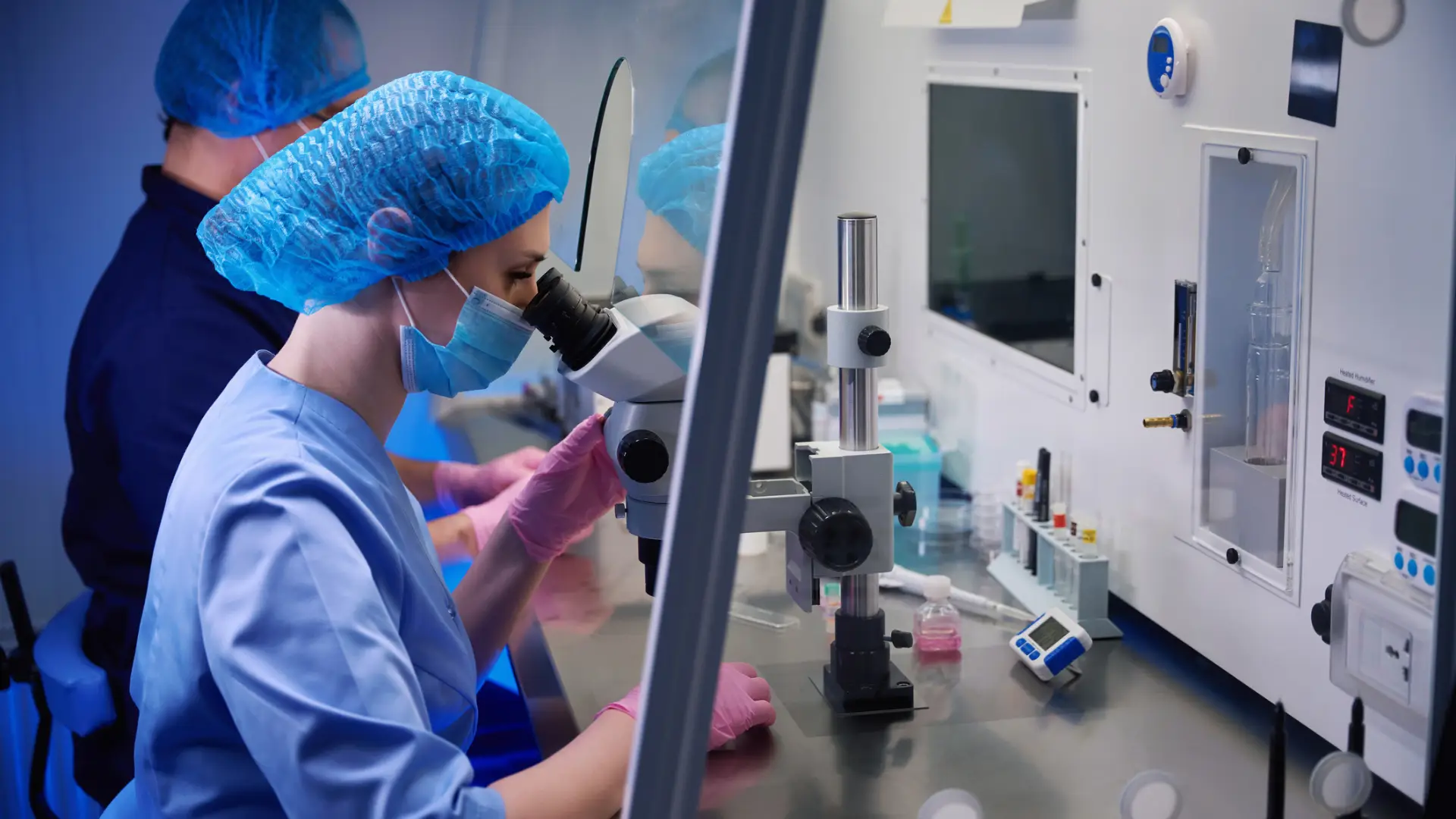
Hours later in the lab, the embryologist inserted a single defrosted sperm—half from my stockpile, half from Paolo’s—into each egg, and placed them into petri dishes with a culture medium designed to mimic the environment of the fallopian tubes. The dishes then went into incubators where temperature, humidity, and light were carefully controlled for five days. Hearing this, I had flashbacks to the week my kindergarten class watched baby chickens break out of their shells. I then learned the term for a mature embryo—a “hatching blastocyst”—and I’m still ruminating on that unexpected parallel between chick and child. I can’t decide if it’s profound or creepy. I think both.
By the way, the IV part of IVF is those petri dishes. Couples making babies in the wild, so to speak, do so in utero. We did it in vitro, or in glass. But “test tube baby” is catchier than “petri dish baby,” so I get why that stuck.
Of the 40 fertilized eggs, 26 embryos survived—the standard rate of attrition in our ruthless Darwinian world. From there, 12 were deemed high quality, or Grade 1. Thankfully, half of those contained my sperm and half contained Paolo’s. (Had the G1 embryos all been his DNA, I’m not sure what we would have done, both practically speaking and vis-à-vis my self-esteem.) The clinic then cryopreserved the G1 dozen using a method of rapid freezing that prevents ice crystals from forming.
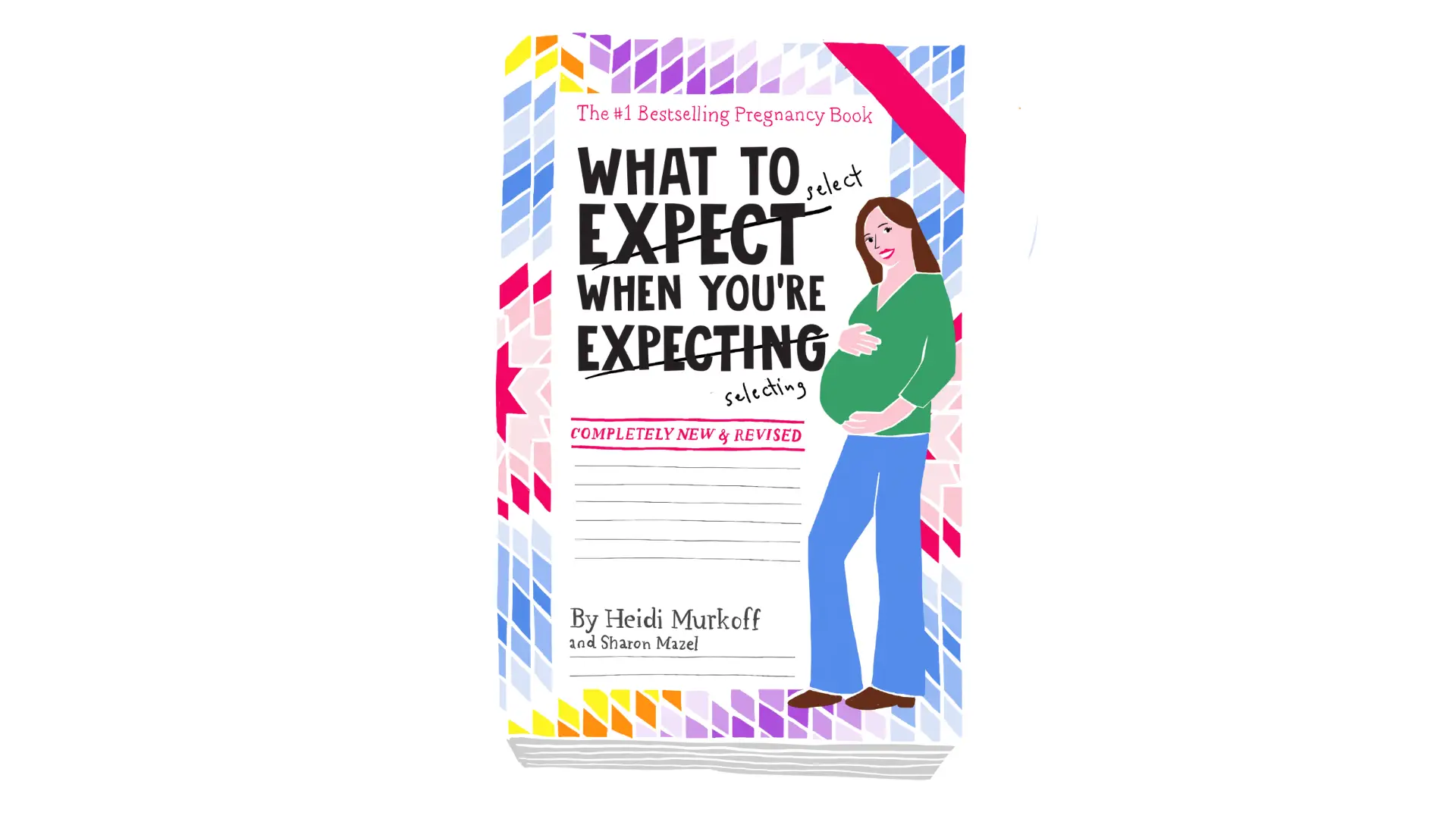
During a biopsy that screened for chromosomal abnormalities, we also learned the embryos’ sex, and had to ask ourselves two questions: would we select the sex? And if so, would we tell people we did?
Paolo and I postponed this discussion until we knew we had a choice. We were always going to select a G1 embryo, so had there been only one sex in the bunch, it would have been a moot point. The ability to choose gave us lots to think about, and led to strong, unsolicited opinions from friends and family:
“How could you possibly interfere?”
“It’s so fun not knowing!”
“That just seems wrong.”
“If you choose, you’ll feel more responsible. Like, if you end up having a naughty boy, you’ll say, ‘We should have had a girl.’”
“It’s a slippery slope. What if you could also choose hair color, height, IQ…”
In several instances, we had to clarify that “choosing the sex” did not mean we could determine the sex of the embryos, just that we could know their sex and choose one based on that.
The thing is, even if we decided not to decide, someone made the decision. It was a false dichotomy to think that either Paolo and I chose or we left it up to nature. There is nothing natural about IVF. It’s meticulously engineered, and that’s why Dr. Sahakian had a 83% success rate.
Philosophical arguments aside, we had a significant medical consideration in that Paolo’s family has a history of breast cancer. We told Dr. Sahakian this, and he said, with no ambiguity, “If it were me, I’d choose a male embryo for Paolo’s.”
That settled it. We thought one of each sex would be nice, so we’d pick a female embryo from my batch.
The other potentially controversial question was: whose embryo goes first? Mine? Paolo’s? Both at once? Some IPs transfer two embryos at the same time to save money on a second surrogate and/or to tackle the diaper phase in one go. We never considered this because we wanted a two-year gap between our kids, as we both have with our siblings. We also heard it’s a higher-risk pregnancy; many agencies don’t allow it.
“You should do the swirl!” people exclaimed with immense enthusiasm while making a mini tornado motion with one hand. When talking through options with friends, this was the fan favorite—to mix our sperm together and have Team Paolo fight Team Charlie for the prized egg.
I get the appeal. It’s a fun visual, and everyone loves a gamble.
“Whose will it be?”
“Will we be able to tell?”
Uh…have you seen us? Paolo has olive skin that glows bronze in the sun while his “mozzarella,” as he calls me, hides in the shade wearing SPF50 and a long sleeve rash guard. It’s cute to think that two dads could maintain their ignorance forever, but this would have been a futile endeavor for us. And more importantly, we rejected the premise. We wanted a girl with my genes and a boy with Paolo’s.
Still, the swirl could have been a fair way to determine order had that been a sensitive subject. But it wasn’t. Paolo insisted I go first and half-joked that if we still wanted another one afterwards, he’d reluctantly oblige. He has a self-deprecating view of his genes that I’ve never understood. Not only because, in my eyes, he’s the most handsome man on earth, but also because we did the DNA test 23andMe for kicks one year. His results were terribly boring: 98% Italian, like the guarantee on wines from his region. Impeccable terroir.
My results, meanwhile, confirmed the melting pot story my parents had always told me: Swedish, Irish, and Ashkenazi Jewish, a blend I call Pale & Persecuted. If either of us had reason to think twice about offspring, it was the mutt, not the purebred. Though Paolo does have a higher percentage of Neanderthal ancestry, so I have that in my back pocket forever.
Selecting which embryo to implant took less than ten seconds. We received a spreadsheet with their characteristics—human cells mapped in Excel cells. The important column titles were Egg Source, Sperm Source, Grade, and Sex. The non-important column titles (well, non-important to us) were storage identifiers that sounded like scuba equipment: Tank, Canister, Cane, and Straw. The tank, canister, and cane were the same across the board, so it was only the straw that identified a specific embryo. The filter of Grade 1 + Female + My Sperm narrowed it down to three embryos that were identical on paper. We went with Straw 1 because it sounded nice and because the row’s position at the top of the spreadsheet might reduce the risk of administrative error, a valid concern after the email debacle.
From the start of our journey, I’d kept a level head by taking it one day at a time. With so many variables out of our control, there was no point in playing out future scenarios like this one—telling the clinic which embryo to use. Whether I expected something other than an Excel document, I can’t say, but the humdrum approach to procreation made me a bit uneasy. She was our baby girl, not Tank 3, Canister 1, Cane 13750, Straw 1.
Subconsciously, I think Paolo and I chose quickly—rushed, even—to move on from thinking about our daughter as a number.