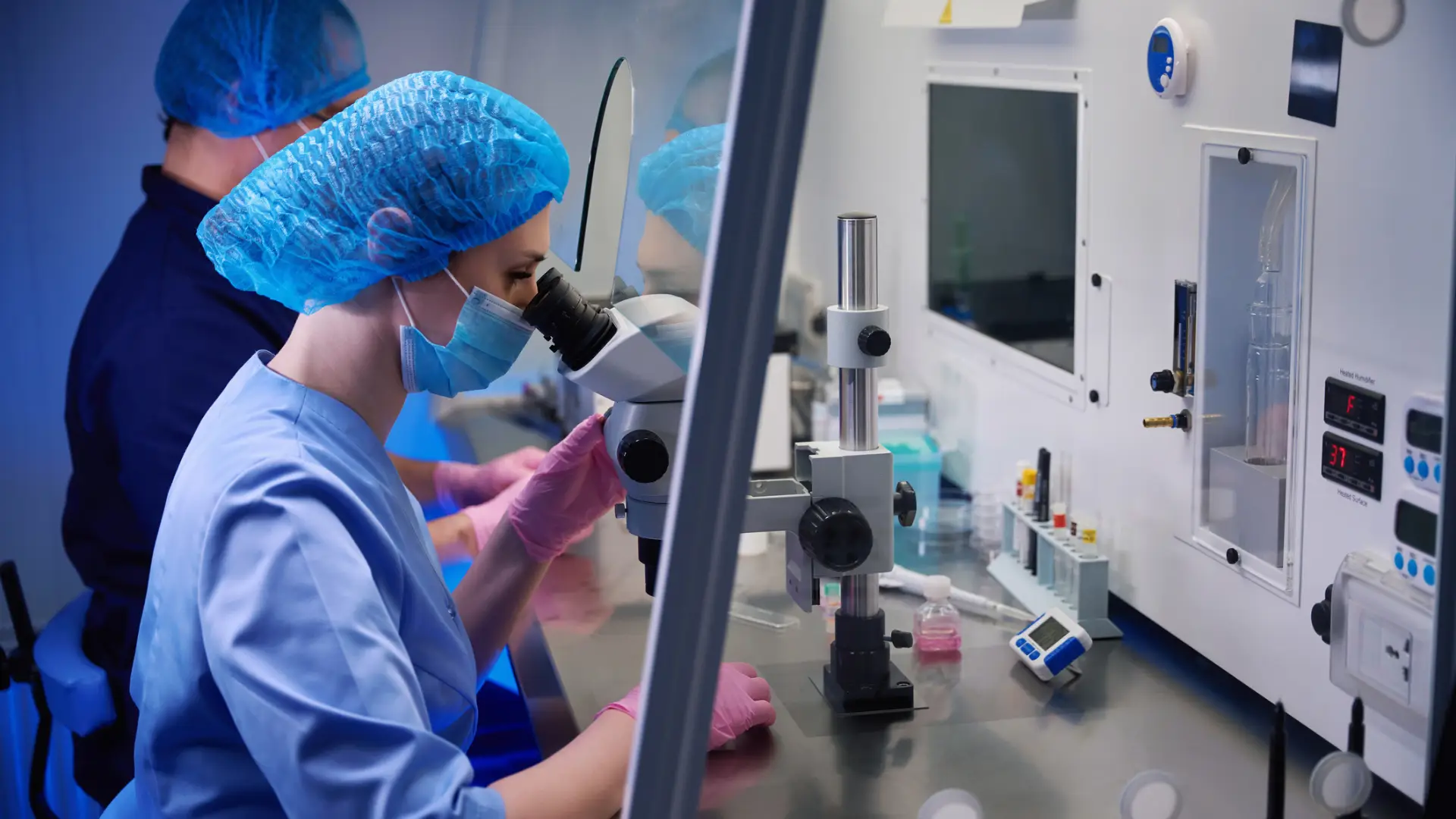
Semen analysis—check.
Sperm samples—check.
Paolo and I had it easy. Our jobs were nothing more than hand jobs.
This is when things got more complicated. Our next order of business was to find an egg donor, as Circle only matches Intended Parents with a carrier after they’ve made embryos. This way, Circle doesn’t keep carriers waiting while IPs hum and haw over donor options, or while donors donate, which might take multiple rounds.
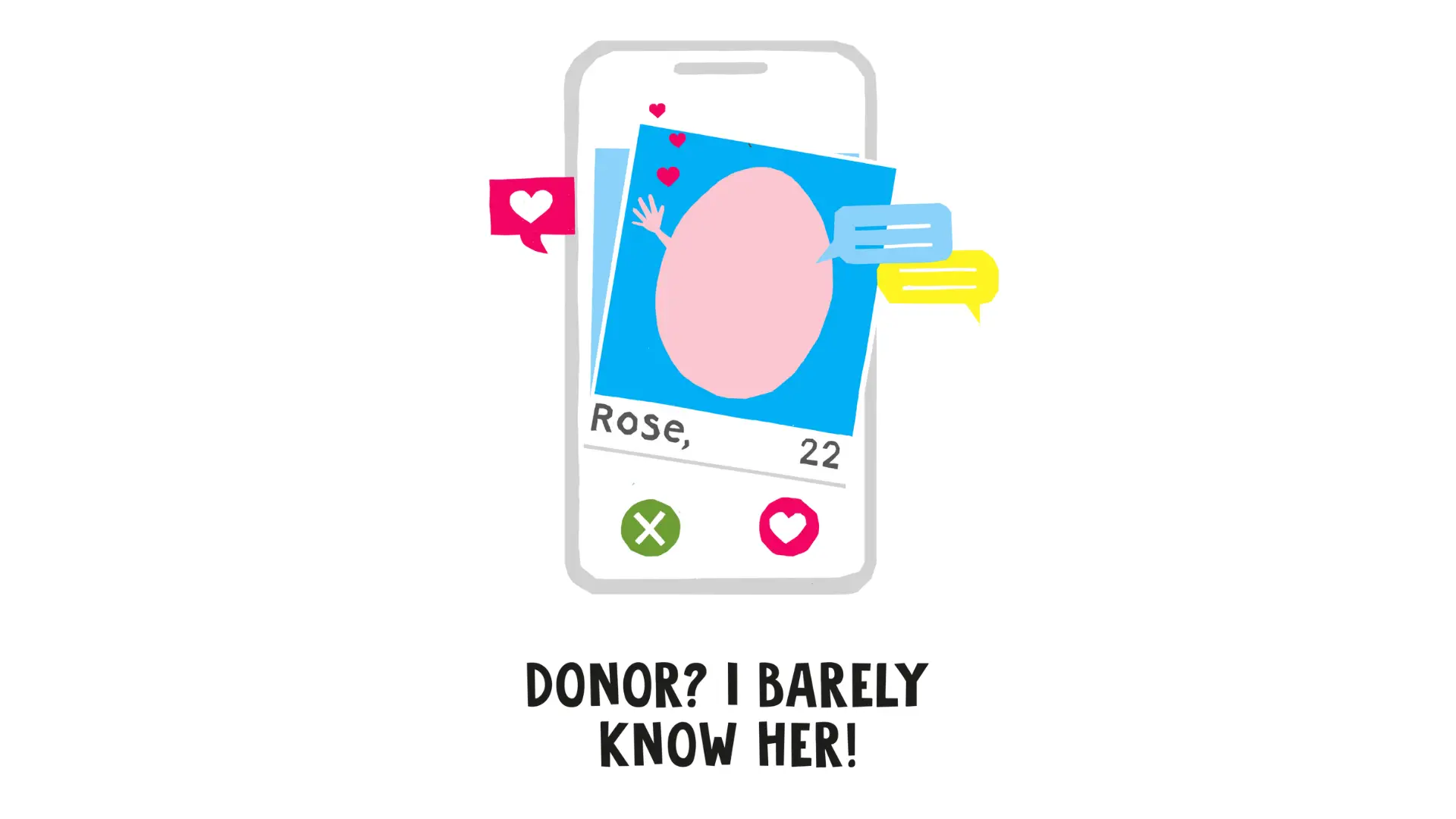
Most egg donation websites are open databases that IPs can browse at will. Like a dating site, you can filter for height, age, hair color, etc. Unlike a dating site, you can also filter for:
- Experienced donors or new donors
- Anonymous donors or known donors
- Women with proven fertility
We only cared about the second point—we wanted an anonymous donor. We’d still meet her via Skype or in person, but all contact would go through an agency. It seemed more straightforward this way—a starting position we could possibly alter down the line, versus starting off as friends and having to backtrack if
the relationship soured for any reason.
At first, the browsing was fun. I’d never used a dating app, having met Paolo in 2010, and scrolling through donors gave me a thrill akin to swiping. I clicked on countless profiles across several sites and tapped heart icons to add top contenders to
Favorites lists. I can do this all day, I thought, as if I’d win the game by putting in the hours.
And I did put in the hours. But instead of gaining confidence in our choices, I felt increasingly unsettled. I was jumping from link to link—no different than online shopping—to make one of the biggest decisions of our lives. That wasn’t the origin story I’d envisioned for the genetic mother of our children.
I could have looked past that part, though. The bigger problem was veracity. I saw typos, omissions, and other sketchiness that had me questioning whether photos and bios were accurate, or if the donors were even legitimate prospects. There was nothing stopping someone from falsifying details or running a full-fledged scam. After all, the target demographic—aspiring parents drunk on dreams of a family—is ripe for defrauding.
I submitted inquiries to connect with the people running these sites. I received generic or bizarre replies that only made it worse. One guy wrote, “If you provide a picture of yourself, I can match you with candidates that have similar facial features.” Huh? Were other people searching for donors that resembled them? And I thought I was a narcissist.
It was at this point that I reminded Paolo of Giulia’s existence. “You know, my darling, if we wanted the closest thing to biological children—”
“—absolutely not.”
And that was that.
In my defense, it wasn’t a ludicrous proposal to make embryos from my sperm and his sister’s eggs, but—in my offense?—I already knew he found the idea nauseating.
A friend came to the rescue by introducing us to Robyn, founder of Beverly Hills Egg Donation. She was high-touch and professional, our friend said. Nothing like the mass-market approach we’d complained to him about. And she was thorough. Each candidate came with a medical questionnaire, an overview of academic and professional achievements, a list of likes and dislikes, and short essays. That all came after an intro call, though. Robyn first spoke with couples to better understand their personalities and preferences. Only then did she handpick donors to present.
An hour after we Skyped, Robyn emailed us four profiles. One of them, Rose, looked promising: a 22-year-old first-time donor living in L.A.
She was vegetarian, did yoga, and admired Paul Farmer—three things that endeared her to Paolo.
She liked peanut butter, dancing, and Harry Potter—three things that endeared her to me.
And her writing was the best of the four by far, both in form and substance.
In addition to current photos, the donor dossier had pictures of Rose as a baby, as a child, and as a teenager, to which you might ask: was it weird rating the cuteness of a 9-year-old girl in a pumpkin patch?
Yes. Yes it was.
Paolo was pleased with her tanned complexion, which he hoped would counteract my pastiness. (A hope I shared, to be honest.) We also liked her profile picture for its clear understanding of her audience. Other donors used what appeared to be their Tinder photos, overlooking the fact that an effective picture for seducing a horny straight man should not be the same one to attract a paternal gay man. To the dolled-up cleavage candidates out there, may I share some constructive feedback: we want to extract something from you, not insert something in you.
We Skyped with Rose, and Robyn joined as a muted, no-video spectator to ensure neither party overstepped unspoken boundaries of decorum. I’m sure she was also curious to verify her intuition.
It was spot-on. A+ matchmaking. Rose exuded great energy, spoke eloquently, and shared heartfelt replies to questions like the obvious one: “Why are you doing this?”
Answer: her friend suggested they do it together.
I imagined how that conversation went.
Hey Rose, want to get matching tattoos?
Nah.
Belly button piercings?
No thanks.
Donate eggs in parallel?
Sure!
Rose was grateful for her health and viewed this as an opportunity to pay it forward. Pay it forward with pay. She didn’t mention the compensation, but it went without saying that the $8k check would be a welcome windfall for a recent college grad. Still, we believed her. Money seemed secondary to mission.
Any awkwardness I felt on the call stemmed from my own hyperawareness of how Paolo and I were coming across. While we were assessing Rose, she was assessing us. She had every right to decide that we weren’t worthy recipients of her eggs, or to not donate at all. She’d never done this before. What if she got cold feet as the abstract idea materialized on her computer screen?
I wanted to befriend her without coming on too strong. I wanted to look excited without implying that our long-term happiness depended on her ovaries. Our goal was to appear young and relatable but also mature enough to be in this position. To that end, we had our dog make a cameo—living proof of our domestic competence.
After the call, we gave Robyn the green light. Rose did too. She was still on board.
Start to finish, our search had taken less than one week. It felt like incredible luck, but the speed also triggered serious reflection of both the pragmatic and existential variety:
Are we rushing this?
Is there anything we didn’t ask?
Did we consider all options?
Regardless, nurture is more important, right?
I had existing plans to be in L.A. and asked Robyn to see if Rose would be up for meeting in person. Paolo and I had already committed to her, so a face-to-face would just be for fun, not further fact-finding. Though if it went badly for any reason—say, discovering a new life development or that she had cankles—we could have backed out.
Rose was happy to meet.
It would have been nice for Paolo to meet her, too, but it wasn’t worth him making the trip from London to L.A. for one dinner. The silver lining was that it would feel less like an interview this way, with Rose and me chatting 1:1.
Or rather, 1:1:1.
Robyn would once again mediate the interaction.
I was nearly at the restaurant when she called saying she’d be late, so I parked and waited in the car. I’d been on the go all day and hadn’t stopped to process the significance of the evening. It was just another calendar entry until Robyn’s delay. Suddenly, I had time to—gasp!—think.
Do I hug Rose or extend a hand?
Do I give her the gift I brought right away or will that seem like some strange fertility offering?
Are we sure this random girl is the right choice?
Will we want to be in touch with her one day?
Will SHE want to be in touch one day?
What if she has cankles?
Mercifully, this anxiety spiral was cut short by a second call from Robyn saying she’d arrived.
I entered the restaurant to find them seated at our table. Rose stood up, so I went in for a hug. She hugged me back. I handed her a Harrods tin of Earl Grey. She said she loved tea. So far so good. The three of us sat down and engaged in standard small talk. (“I’ve never been to this place before.” “I can’t believe how bad traffic was.”) Dialogue flowed naturally. We’d already covered the basics of our bios on Skype, but we essentially started over; any duplication added a nice touch of familiarity.
As with the call, Robyn’s primary role was to prevent off-limit topics and aid conversation, but that’s not an area where I ever require assistance. She was a fairly uninvolved third wheel until the end. With dinner almost over, I felt a now-or-never impulse to seek a few more answers, and I may have crossed the line.
First, I asked Rose if she was dating anyone. This was slightly careless, not because it was an overly personal question but because there was an implied right answer. A donor in a relationship faces additional complications, both physical (weeks of forced abstinence) and emotional (having to explain her decision, or defend it). A good support network is critical but can be found in friends and family who don’t have a conflict of interest.
Rose said she was single. She planned to “live like a nun” and embrace the pre-retrieval period as an excuse to avoid alcohol and junk food. This pleased me greatly, which was probably apparent.
My second question was worse. I asked if she would donate again after us, and I immediately regretted it. As with the dating question, it came with an obvious desired response that went something like, “Most definitely not. You’re the only couple I will ever do this for. I won’t even have my own kids if you prefer.”
What’s more, the question drew attention to the biological realities of the process. Donors take hormones that can cause unpleasant side effects, and the retrieval is an invasive procedure that can cause lingering discomfort. Rose said something tactful along the lines of, “It will largely depend on how my body reacts” before Robyn intervened. She hinted at the wide range of experiences donors can have and switched topics.
Even with those two faux pas, the date went beautifully—perhaps the only one-night stand in history where both parties hoped it would result in a baby. I really liked Rose.
Or the woman we thought was Rose.
The next day, I gave my second sperm sample and told Dr. Sahakian about dinner. He later mentioned this to his assistant—“Charlie met up with Rose last night.”—who interpreted that to mean we were in direct contact. Later that day, she copied us all on an email.
It was a pretty serious mistake. Rose was an anonymous donor who would only ever communicate with us through Robyn. To protect her privacy, they’d used her middle name as her first name, something we deduced by seeing “r” in between two other names in her email address.
Paolo and I forwarded the email to Robyn with a tone of urgency bordering panic. Our main concern was that Rose would flip out and back out. We also didn’t love that she had our email addresses, but I told Paolo, who was more flustered, that if she ever wanted to uncover our identities, she could do so with a simple search of Charlie and Paolo. He disputed this, so we ran the experiment; the first video result was our wedding highlights reel.
Everyone agreed to delete the email and pretend it never happened. Crisis averted.
We progressed to the contract stage. We all had to sign a 24-page agreement before Rose could meet Dr. Sahakian. It would be the same with our carrier. And in both cases, we paid for the women to receive independent legal counsel. As in, we had to, not because we’re nice guys.
As you’d expect, the main point of the contract was for Rose to “forever waive and relinquish any and all of her rights to the donated eggs,” and to never interfere or seek a parent-child relationship. While the first thing that comes to mind is the dreaded scenario of a donor claiming to be the rightful mother, parental ties work in the opposite direction as well: we can never hold her liable for obligations like child support. (“Hey Rose, remember us? From 20 years ago? Yeah, hi. College tuition is really expensive and the kids are half yours, sooo…”)
Second to the above, restated in several forms, was her cooperation in the process: responding to emails, following the medication schedule, showing up for appointments—stuff like that. In exchange, she would receive payment, and the Expenses section specified that this money covered her “time, effort, pain, suffering, discomfort, inconvenience, and medical risks assumed.”
I paused after this string of scary synonyms. A bit of discomfort was one thing but suffering? Physical or emotional? In the moment or in the future? I assumed this phrasing was a matter of dot-every-i legalese and not a common consequence, but a donor might have reacted differently. I wondered how Rose felt reading that sentence.
Finally, in the spirit of taking nothing for granted, Rose confirmed she was not currently pregnant, and agreed to reimburse all costs if that changed.
That is, unless she became pregnant with our baby, but there was also a clause forbidding sexual relations between IPs and their donor. I joked with our lawyer that he could delete that part from contracts with gay dads, but he told me, with no reciprocal jokiness, that he’d heard of gay IPs propositioning their donor to save money.
“After all,” he said matter-of-factly, “Viagra is cheaper than a carrier.”
This very true observation had never occurred to me, but, alas, we’d already signed.