
As with Sara, the post-birth transition with Jen was effortless. She and Dave joked that with four children of their own, it was a relief to deliver a baby they didn’t have to worry about. As soon as she stopped pumping, our texts dwindled from weekly to monthly to never, basically. These days, with both women, we really only message on the kids’ birthdays, which double as anniversaries of the heroic act they did for us. It’s always been second nature: when I say, “Happy birthday!” to Leila and Luca, I write, “Thanks again!” to Sara and Jen.
We also thank them with festive Eataly baskets in December. The contents vary—2023 had a box of fusilli, a jar of pesto, and a bottle of Barolo; 2024 had penne, marinara, Merlot—but they probably appear identical to Sara and Jen. If they’re wondering, Will Charlie and Paolo send me the same pasta, sauce, and wine every Christmas? the answer is yes. What else can we do? Anything more isn’t sustainable in the long run; anything less might come off as a slight. If we stop the baskets, I fear they’ll think we’re over them, as if our gratitude had an expiration date.
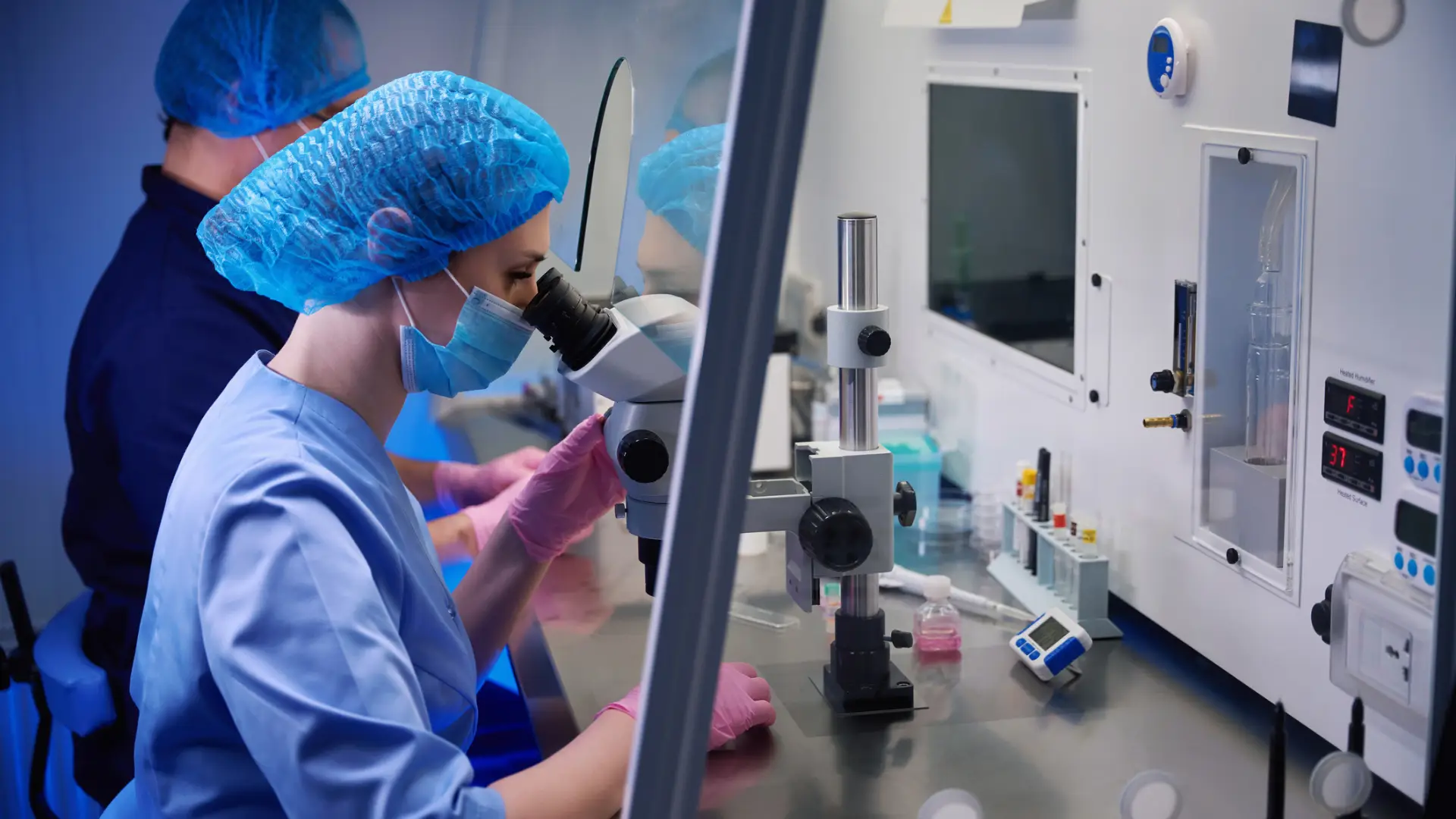
We’re also in a predictable rhythm of contact with our ten remaining embryos. The clinic’s annual check-in is eerily in sync with Apple. It feels like I receive both emails on the same day each year:
Renew your iCloud storage?
Renew your cryostorage?
The options are:
- Pay $900 to keep them frozen for another year
- Donate them to another couple or individual
- Donate them to medical research or training
- “Thaw and discard”
When we no longer want them, we’ll likely choose number three, but when will that be? While the clinic poses this in practical terms, our existential interpretation is, “Do we still want a contingency plan in the life-shattering event that we lose a child?” Thus far, we’ve instinctively renewed our subscription, but a day will soon come when that window has closed.
For five years, we didn’t question our egg donor arrangement either. Then in early 2024, Paolo and I reconsidered it. We’d opted for anonymity at the start because it felt more prudent, but now that our kids were proper little humans asking intelligent questions about the world, we had a change of heart. We asked Robyn to ask Rose if she was open to connecting.
She was.
Step two, per Robyn’s protocol, was for both parties to speak independently with her agency’s psychologist to ensure we were on the same page about what our new relationship would look like. If Rose expected a catch-up call every few years but Paolo and I expected her at every Thanksgiving dinner, it was better to know that before we were put in touch.
Step three was to amend the contract.
Once all of that admin was done, we scheduled our first-ever call together without a chaperone.
“Hi Rose! I mean Megan,” I said, laughing at the switch from her donor alias to her real name.
Immediately after both births, we’d told Robyn she could share the good news with Megan, and we assumed she had.
Well, we assumed wrong.
Megan had no clue what had happened in the six years following her March 2018 donation until Robyn emailed her out of the blue with our request and a family photo. Megan was having dinner with friends when she opened the picture of a 5-year-old girl and 3-year-old boy made from her eggs.
“I was like, ‘Whoa, there they are!’” she said with a giggle. “It made it real in a very exciting, happy way.”
Megan was exactly as we remembered her: cute, charismatic, smart. I couldn’t stop smiling as I looked from her face on my computer to the framed faces of Leila and Luca next to it bearing her resemblance.
We encouraged her to let us know if she’s ever in England and to reach out any time she wants. I added her to our holiday card list, so at the bare minimum she’ll get a once-a-year update on our family.
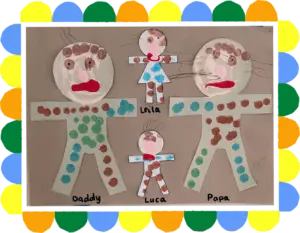
As for Paolo and me, we’ve lived in London since 2017, and we love it. The kids have adorable British accents, and Paolo and I rarely feel self-conscious being gay parents. We never do, really, with a few scattered exceptions like the time we used an agency to find a nanny. The woman on the phone wrapped up our conversation by recapping our attributes. She grouped “same-sex couple” with “has a dog” in a list of details that might be problematic for certain candidates.
In moments like that, I think, Oh right, some people don’t approve of us. But I’m more amused than agitated.
For a long time, I thought this was the goal—assimilation. And not just our goal, but the goal of the gay rights movement: to reach a point where two men can lead a “normal” life with textbook hetero trappings. Earlier activists were daring so that we could be domestic, their picket lines making way for our picket fences.
As Leila and Luca have grown up, my outlook has changed. It’s not that former generations fought so that I wouldn’t have to. Rather, they fought loudly so that I can fight quietly. Their arena was national and political. Mine is more local and social.
It’s the quotidian that counts, like correcting someone who calls our nanny the kids’ mother.
Like telling our insurance company that a form with lines for Parent 1 and Parent 2 would be more inclusive than their current one with Mother and Father.
Like presenting on Pride Month to Leila’s kindergarten class.
Like adding “Proud parent via surrogacy” to my LinkedIn profile.
Like holding hands with Paolo on the street.
Like holding hands all four of us.