We originally planned to visit Sara at the 6-month mark, but she dropped not-so-subtle hints that the 20-week anatomy scan was a special occasion. It’s typically when a couple learns the baby’s sex, and she had fond memories of that moment from her own two pregnancies. Having picked the sex of our child, we felt less compelled to fly all the way from London to hear, “It’s still a girl!” But once we knew it meant a lot to her, we booked a trip.
Apart from that one evening in L.A. seven months earlier, our relationship existed entirely on screen. Lots of FaceTime, little face time. Our visit to Wausau, Wisconsin would shine a light on Sara’s full identity—as a working mother, a wife, a daughter—and put her surrogacy decision into context.
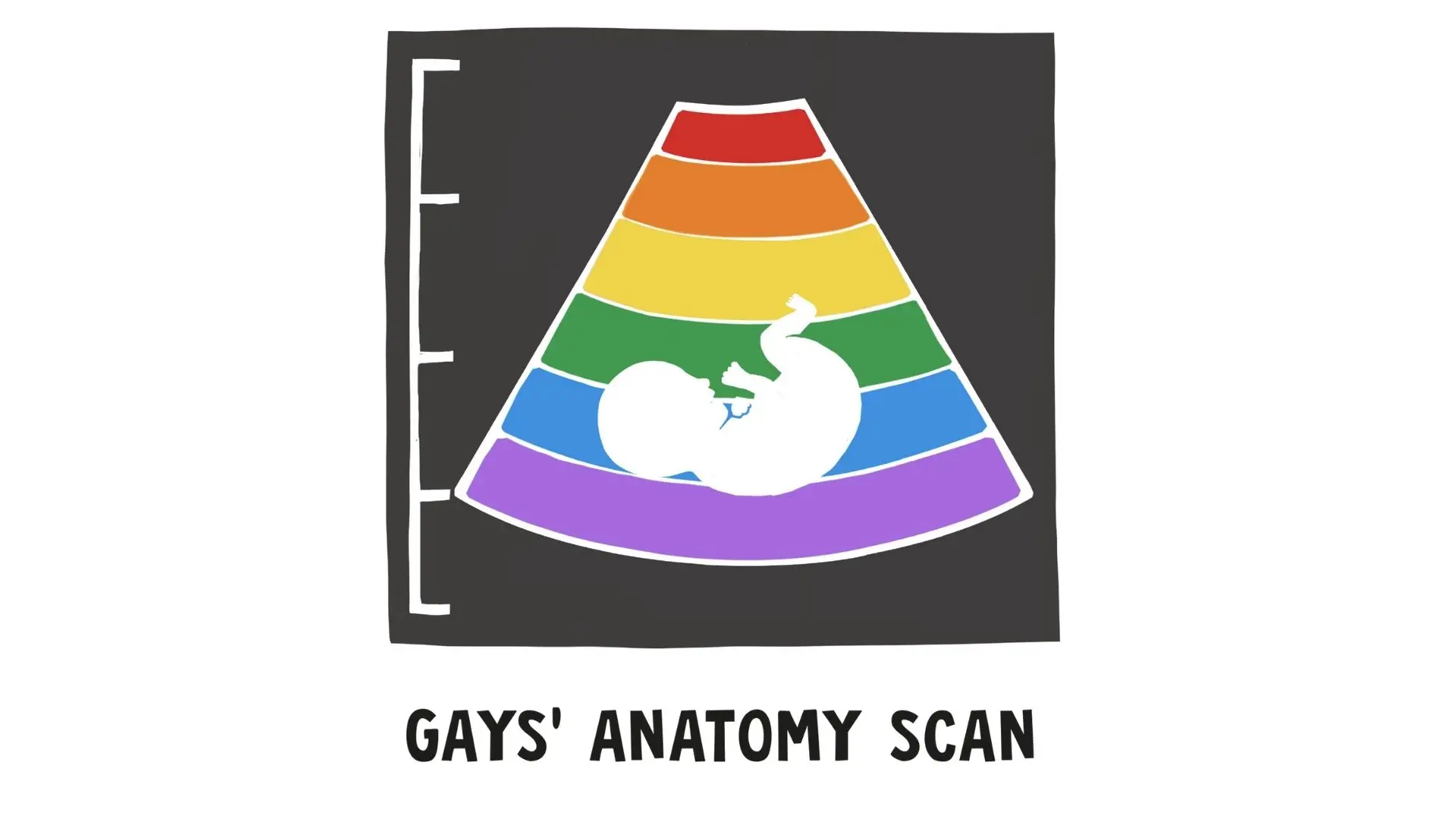
She picked us up from the hotel, and we exchanged gentle hugs, mindful of her precious cargo. In app speak, our little lady had just graduated from apple to mango. The anatomy scan provided a concrete complement to this fruity frame of reference. It also doubled as a high school Biology refresher in the amount of detail that the bubbly nurse, Molly, covered.
“I know the screen looks like a blurry mess,” she said, “but it’s easy once you know that black is fluid, white is bone, and grey is skin and fat.”
With that tricolored key, we could decipher features, limbs, and organs despite the baby’s constant movement, causing Molly to joke, “She’s showing off for you,” a line she no doubt used every time.
“Let’s see if she’ll cooperate…okay perfect…here we have the four chambers of the heart, which is good.”
She said that last bit every time.
“Here we can see baby’s renal arteries coming off of the aorta, which is good, and two kidneys.”
She was simultaneously pointing out the parts and verifying their existence.
“The heart and stomach are on the same side, which is good.”
She took measurements and screenshots at each of these checkpoints, causing a strip of images to unfurl from her workstation like arcade tickets.
“This is baby’s umbilical cord, and this is her bladder. It shows she’s peeing, which is good. I know that’s weird to think about, but it’s an important sign.”
It was weird to think about, but not as weird as what came next.
“Over here are the three lines that confirm her sex.”
“The hamburger?” Sara asked.
“Exactly!”
I was pretty sure I understood, but the word caught me off-guard. I clarified, “By ‘hamburger’ you mean…”
“…the labia,” Molly said. “The two thicker folds on the outside form the bun and the middle line is the patty.”
“Right, just double checking,” I replied, while thinking, Are we really comparing my daughter’s vagina to a Big Mac?
Paolo didn’t miss a beat. “Charlie hasn’t seen many of those.”
“He means hamburgers,” I interjected. “I’m a very healthy eater.”
With her right hand guiding the probe and left hand controlling the keys, Molly captured every angle in a performance that went beyond the scan’s minimum requirement, from what I could tell. Sara once said that nurses go the extra mile for two types of parents: surrogates and Army wives. In both cases, fathers are absent for much of the pregnancy, so nurses produce bonus footage for distant dads, the theory goes. That certainly seemed true in our case. Molly never fatigued in her commentary.
“I’m now measuring her abdomen, femur, and cerebellum to get a rough sense of baby’s weight and size. See her foot? It’s two centimeters long. So teeny tiny! In total, she’s weighing eight ounces today, not even a can of soda.”
On top of the anatomy lesson, Molly taught us a few fun baby facts. Did you know that female fetuses develop their lifetime supply of eggs at around five months? No new eggs are produced after birth. And what about this: if a pregnant woman has heartburn, it could be a sign the baby has hair. Sara had mentioned this once—“Oh man, your daughter must have lots of hair cause this heartburn is intense.”—but I’d dismissed it as an old wives’ tale. (Sorry, Sara!)
The unabridged ultrasound would have been great were it not for Sara’s bursting bladder. As with the embryo transfer, she’d been asked to hold her pee.
“Holy smokes,” Molly said, inadvertently teaching Paolo some local lingo. “Your bladder is enormous. Look here—it’s squishing the uterus. Don’t you want to go to the bathroom?”
“I was told not to,” Sara replied flatly.
“Well, I’m not sure why. Go pee for goodness’ sake.”
Sara said something more diplomatic than what I would have said—i.e. “Are you effing kidding me?”—and rushed to relieve herself in a brief break that felt like an intermission.
At the start of Act Two, Molly asked if we’d picked a name. I couldn’t tell if (1) the thought randomly occurred to her, (2) she tired of using the placeholder “baby,” or (3) she always waited to develop a rapport before asking. Coincidentally, on our way to the hospital that morning, we told Sara that we’d settled on one, but she wasn’t sure if she wanted to know before the birth. Molly’s question gave her another chance, and she took it. “Okay, I want to know!”
When we said “Leila,” a predictable chorus of awws followed.
Between Paolo and me, I’m usually the softy, but he was the one who got emotional during the ultrasound. It was when we could see Leila’s face in profile with the tip of her nose and chin in clear view, her mouth slowly opening and closing, that I noticed his eyes welling up. I knew we were thinking the same thing: Holy smokes, that’s OUR baby.
Sara had arranged a tour of the maternity ward after the scan so that we’d be familiar with it when we returned for the big day. The elderly woman showing us around gave her normal spiel: “In this room, Mom and Dad can—”
“—Um,” I interrupted, buying myself time to ease into the correction.
“Oh, I’m so sorry,” she said, blushing. “In this room, the parents can…”
We smiled and forgave her. Then forgave her again. And again. She said “Mom” four times on the tour, each time with an apologetic wince of Shit, I’m not used
to this.
Paolo and I understood. In fact, had it just been our own sensitivity to the word, we wouldn’t have said anything, but Sara also felt uncomfortable. Ever since
she started showing, coworkers called her “Momma,” and she hated it.
At one point, our guide asked her, “Will you breastfeed?”
The three of us said “no” at the same time.
Or rather, Sara said “no” in a normal speaking voice while Paolo and I blurted out “NO!” so forcefully that it startled the poor lady.
Sara would pump but never breastfeed. Circle had this as the default proviso in our contract. Any good agency would.
Breastfeeding is a beautiful bonding opportunity for a mother and her baby but a dangerous bonding risk for a carrier and her IP’s baby.
To celebrate our productive reproductive morning, we had lunch at Sara’s favorite restaurant. I had the Wisconsin Burger and a glass of local beer, which was meant as a toast but perceived as a taunt. Sara loved beer, and I genuinely forgot she couldn’t have it.
“You know,” she said, “some husbands don’t drink during the pregnancy,” teeing me up to reply, “Good thing I’m not your husband!”
We went for ice cream after, and, while waiting in line, Sara deliberated, “Pistachio or rum raisin?”
Really, Sara? Out of all the options, you’re eyeing the one with RUM in its name? Is this revenge for the beer?
I knew the flavor only had trace amounts of alcohol, if any, but still, the comment caused me to—not question Sara’s judgment, that’s too strong a word—to dwell on her judgment. It reminded me that the person carrying our baby lived 4,000 miles away and made countless decisions we didn’t know about. In the end, she went with pistachio, but the ice cream outing triggered a big scoop of reflection with some spiraling sprinkles on top.
To be clear, I never worried about contract violations like smoking or drinking. It’s what Sara was not doing that ate at me. No, what we were not doing—what Paolo and I couldn’t contribute. Prior to the birth, we made two short visits that helped us feel connected to Sara and the baby but hardly constituted participation in the pregnancy. They say that babies recognize voices and music from the womb. I loved the idea of Paolo playing his favorite arias for Leila. She’d grow up to love opera, and we’d connect the dots back to the times he blasted Puccini.
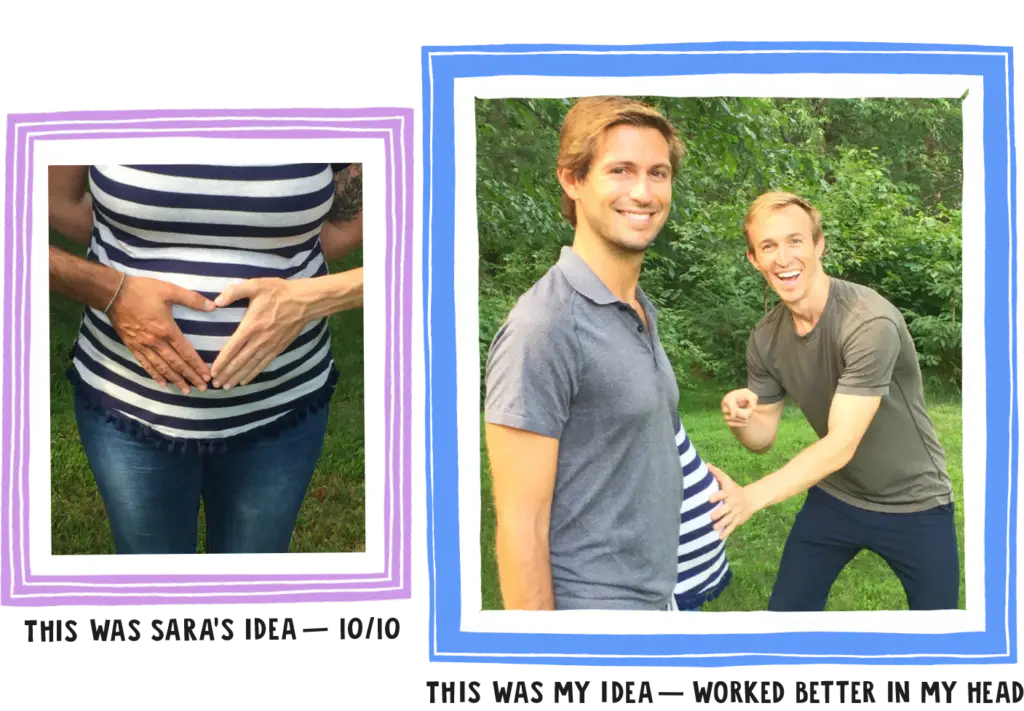
Babies also build up immunity based on the mother’s diet. If I’d been living with Sara, I could have helped her cycle through common allergens.
Happy sesame day, my turtledove!
Ready for peanuts, my little poodle?
In this imaginary world where I call my spouse a sappy nickname every day, I do everything possible to give our child a leg up, from aromatic belly rubs to prenatal yoga.
In my head, I was the best make-believe husband ever.
In reality, I was a pen pal.
Every now and then, I’d sink into a bout of gloominess thinking about this—about how we weren’t leaving our unique imprint from the beginning. I’d ask myself, Should we be doing more to bridge this gap? We heard that some IPs visit once a month. We heard that some even send voice recordings for the carrier to play against her stomach. That would have been on brand for me—Type A overachiever—but I’d made peace with the limits of my control. It was the only way to stay sane.
What happened next was a prime example.
On the morning of our departure, Sara sent a concerned text: My urine was really dark just now. I can still feel the baby moving, but I’ve made an appointment just in case.
Paolo and I were driving to the airport when we read it. We pulled over to brainstorm action items, then realized, practically speaking, what could we do? Sara was on top of it. Our job was to listen and to comfort.
I’d never felt more helpless, but that’s the reality of any pregnancy, not just one via surrogacy: months of predictable change punctuated by moments of uncertainty and sometimes terror. We’d just had the anatomy scan. Everything was on track. Until now?
What if it ends here?
After a few tense hours of waiting, it turned out to be a double whammy of kidney stones and a UTI. No fun for Sara but no danger to Leila.
We had a few days in L.A. before returning to London, during which time my best friend threw us a baby shower. When she first offered to host one, I declined. Paolo and I weren’t doing the heavy lifting, after all, so it felt like undeserved attention. But she wore us down. She went all out with a champagne toast, themed napkins, advice cards, and—in homage to our adopted homeland—a High Tea spread complete with a pink cake. (She knew our take on gender stereotypes and still went for pink, the sneaky bitch.)
Once everyone arrived, Paolo and I seized the floor to give a short overview of the surrogacy process because, as I candidly said to the group, “We don’t want to repeat ourselves 33 times today.” The short synopsis and communal forum liberated us to enjoy other topics of conversation that afternoon.
Though one topic dominated all others:
“Are you ready to have a baby?”
Over the course of the shower, I came to resent this question. It’s a staple of pregnancy small talk for good reason, but no succinct answer can be sincere.
If I said, “Yeah, I think so,” or some overused line like, “As ready as any first-time parent can be,” I’d appear naïve or disingenuous. “Great!” the person replies, attempting to preserve my delusion. “You two will be the best dads,” she says, or some variation that answers her own question like, “You guys are so ready.”
If instead I went the honest route by replying, “It’s hard to know,” or, “Actually, I’m kinda scared,” shit would get more real than the asker intended.
So I often dodged it with humor: “Let’s hope so!” and, “People have done this for centuries, right?”
They chuckled. I chuckled. Next.
But it wasn’t the fake social exchange that really bothered me. I took this question more personally because the truth was: we weren’t ready. As two barren men, we couldn’t be. Sure, we felt mature enough as individuals and stable enough as a couple, and sure, we read the obligatory books, but while Sara got cramps and contractions, we got texts and emails. For her—for all women—biology guides psychology. Nine months of physical change gets a couple into parent mode, like acclimating to high altitude through steady ascent. By the time they reach the peak, they’re accustomed
to disruption.
Not so for Paolo and me.
Daily life continued unchanged, which was awesome in many selfish ways, but it meant that our readiness wouldn’t be tested until a screaming baby fell into
our arms.