I’m excited to focus this month’s family-building column on domestic adoption, and more specifically, open adoption, which can create meaningful opportunities for children to maintain connections to their birth families when those relationships are safe and appropriate.
While every adoption story looks different, some best practices are worth sharing. My hope is that by the time you finish reading, you’ll understand what the best outcome in an adoption actually looks like: birth-family-centered in a way that can shift depending on the situation in front of you and put into practice ethically and transparently.
The best way I know to show you that is through an actual open adoption story. This one is built around an interview I had with GWK Academy members (and new dads) Chase and Nick, along with Alice, Director of JustFamily, a free program offered by JustChoice, an Ohio-based adoption agency led by my own mentor in this space, Molly Rampe Thomas.
Meet Chase and Nick
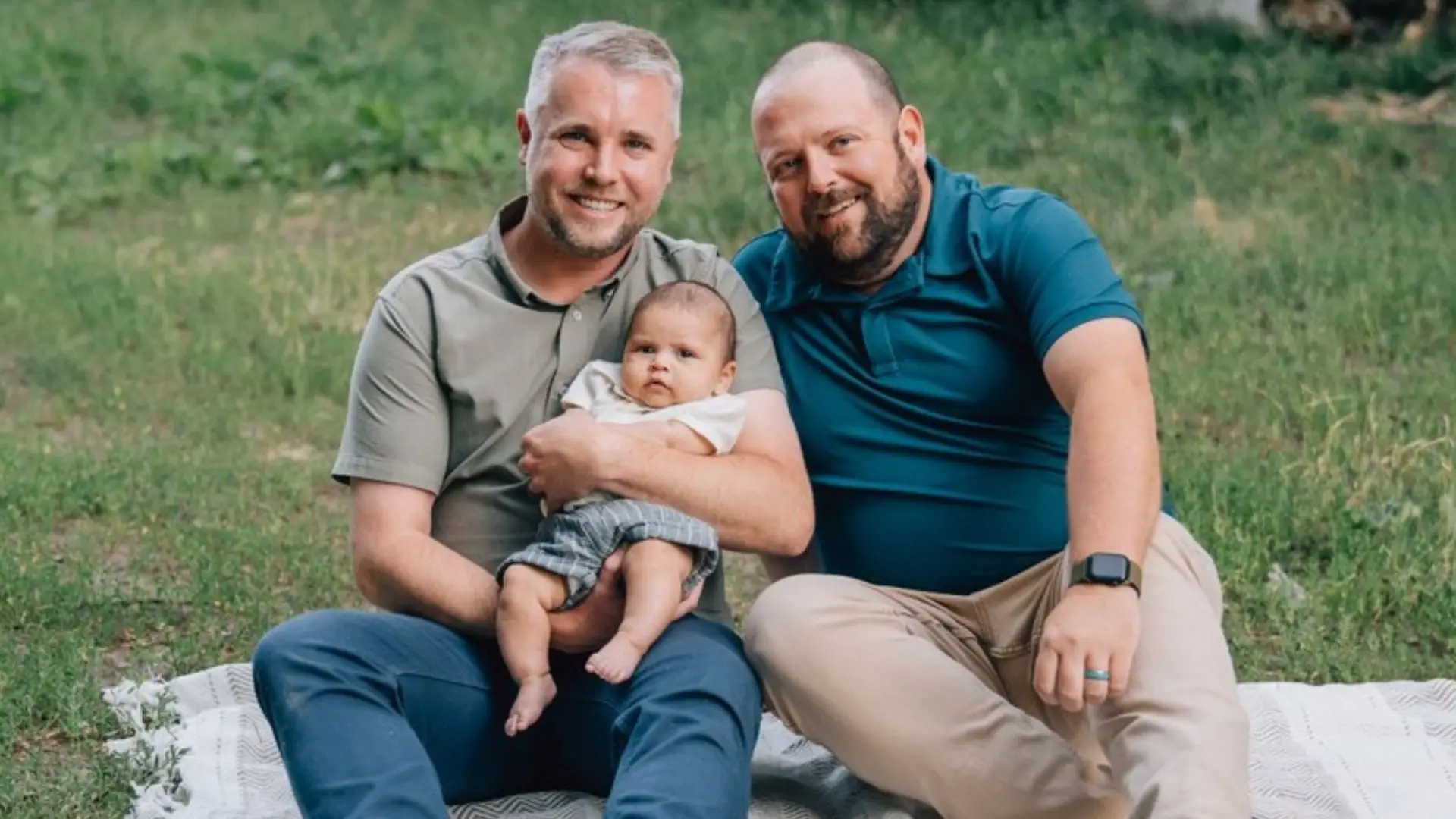
Chase and Nick got married in 2021. Both wanted to be dads since before they were seriously dating. Chase was ready to start right away; Nick, older and more patient, wanted a few years to build their marriage first. They agreed to start looking into adoption around their third anniversary, in 2024. Chase did everything he could to get ready, including two full passes through our GWK Academy adoption course, partly to get the latest information and partly, in his own words, because “OCD… what have I forgotten, what should I remember.”
They chose adoption over surrogacy for a couple of reasons, cost being one of them, but mostly because neither felt biology had much to do with what makes a family in the first place. Chase has a half-sister he simply calls his sister, no qualifier needed. Nick has aunts who were adopted into his family, and to him they’re simply his aunts. That’s the same lens they wanted to bring to their own child. They wanted was to give a home to a baby who needed one, biology aside.
Chase and Nick began the process cautiously because they understood the facts. Nationally, roughly 36 families are waiting to adopt for every one baby placed. Only about 1 in 4 adoption agencies nationally is truly inclusive, and that number is likely even lower in a conservative state like Utah. Nick put it plainly: the state’s adoption world is “so oriented around straight couples” that only a handful of agencies will even work with gay couples, and the wait can run years longer. Their backup plan, only half joking, was to pour love into their nieces and nephews and get involved with mentorship organizations like Big Brothers Big Sisters of America.
In September 2024, I connected them with three agencies, JustChoice among them. What stood out about JustChoice was how concretely its birth-mother-first approach showed up in practice. As Nick told me, “It wasn’t get you a baby at all costs; it was about taking care of women who are often in a situation they didn’t expect to be in and putting their needs first. If what’s best for them is placing the baby with a family, great, but they’ll support them either way.” That clarity of purpose is what set JustChoice apart, and it’s the thread running through everything that happened next.
As JustChoice’s CEO and Founder Rampe Thomas puts it: “A successful adoption isn’t measured by whether a baby is placed. It’s measured by whether the birth parent had real choices, meaningful support, and the dignity to make the decision that’s right for them. Our job isn’t to find babies for families – it’s to support people.”
A baby, not a pregnancy
Fifteen months into their wait, a match with an expectant parent fell through. They privately started dreading the two-year mark, when they’d have to renew their home study and agency paperwork. When the actual match came, it looked nothing like what they’d pictured.
SS, the baby’s mother, had given birth about two months earlier and spent that time trying to get to a place where she could parent her son herself. In the middle of a real crisis and cycling through treatment, she called JustChoice to say she wanted to place him for adoption. She made that decision while incarcerated, which should tell you something about how badly she wanted this for him. A JustChoice staff member visited her in person, but the facility wouldn’t allow SS to sign the adoption paperwork that day. Chase and Nick didn’t know anything yet. They wouldn’t until two days later.
That’s when JustChoice reached out and connected them with SS and her attorney for a fifteen-minute call. Chase was in Portland, Nick was in Utah. The speed of it, the weight of what was being decided, the nerves of talking to Sarah directly, left everyone reeling. By the next afternoon, they had a text from Alice: “Y’all packed?” SS had signed the paperwork.
Because SS was in treatment, the case had been running through JustChoice’s host family program, a bridge option for situations where a birth mother still might parent and doesn’t want the case to become a child protective services matter. Under that program, the baby had been staying with JustChoice staff.
Chase and Nick flew out before sunrise, landed in Columbus, and picked up their son that afternoon. In the first photo of the three of them together, everyone looks shell-shocked. The new dads had maybe three or four hours of sleep.
Boundaries without abandonment
This is the first place I think you can really see what ethical, birth-family-centered adoption demands in practice, because the hard part for Chase and Nick wasn’t the paperwork. It was everything after.
SS reached out constantly in the first 48 hours. Meanwhile, Chase and Nick were still catching their breath in an Ohio Airbnb with no family of their own nearby. JustChoice stayed in it with them and got them through it. Alice, along with the agency’s attorney, told them plainly that they were allowed to set boundaries, even block a number if they needed to, and that support didn’t evaporate the moment placement happened.
SS has since asked them for money for her commissary account, and they’ve had to tell her no, because it’s not something they’re legally able to do. Instead of shutting the conversation down, they’ve tried to find reasonable compromises: staying in contact, sending photos, being honest about what they can and can’t do. “You have to actually listen to her needs and understand where they’re coming from,” Nick told me. That’s not the easy, feel-good version of open adoption people picture. It’s the real one, and it’s a lot more work.
“There isn’t one right way for an open adoption relationship to look,” Alice told me. “The relationship has to be built around the people involved, and that means making room for both connection and boundaries. We can support people without taking responsibility for fixing every part of their lives.”
Giving their son his own story
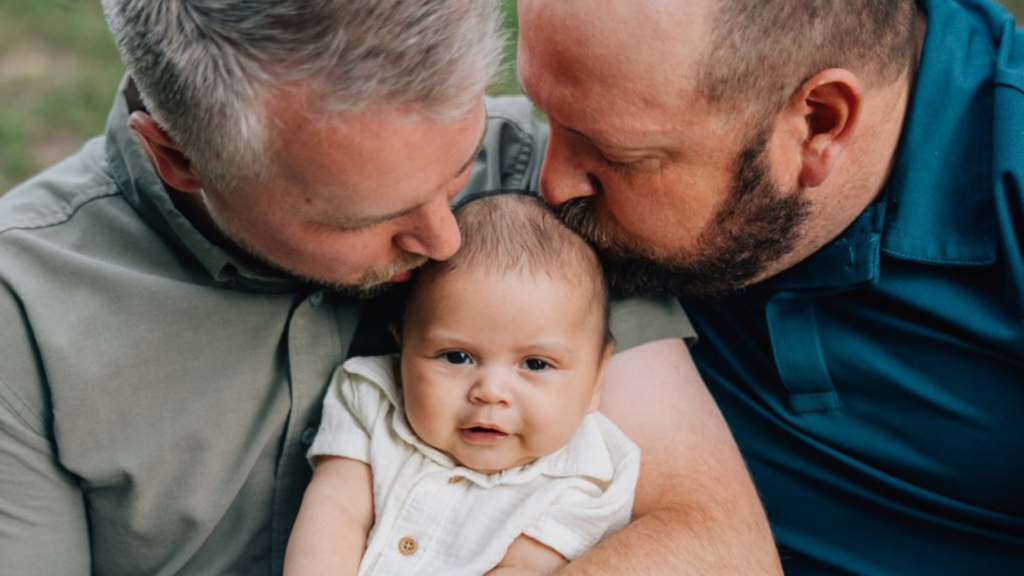
The second piece, and the one I think is the real marker of what ethical open adoption looks like in practice, is what Chase and Nick have decided not to do. They don’t talk badly about SS in front of their son, and they don’t plan to.
“I never want him to feel shame about where he came from,” Chase said. “I want him to be proud of his story.” When their son is old enough to have questions about the choices SS made, they plan to let him work through that part of his own story himself, instead of handing him a version shaped by their own frustration.
Open, not finished
Right now Chase and Nick do weekly video calls with SS on Sunday evenings, working toward something closer to monthly over time. Once they see real, sustained stability from her, their hope is to visit her in Ohio or bring her to Utah to see the home where their son is growing up. Their boundary is simple: as long as she is safe and consistent, she gets to stay part of her son’s story, and their son gets a real say in what that relationship looks like as he gets older. If he someday decides he doesn’t want a relationship with her, they’ve told me they’ll respect that, too.
“Open adoption is such a spectrum,” Alice said, describing another family in their program with a completely different dynamic than what Chase and Nick have with SS. “It’s easy for those with big, bleeding hearts to want to fix things for someone, but you can’t save them. You can create a safe space for them to be themselves, offer them support, but, ultimately, everyone is on their own journey.”
Addressing Chase and Nick, she shares, “What you’ve built, how you speak about SS, keeping her in your life and conversations, and giving your son a real say in that relationship as he grows, is really beautiful.”
Chase and Nick’s story offers one example of what ethical, transparent, and birth-family-centered open adoption can look like. It’s not a story that wraps up neatly. Instead, it’s an ongoing relationship built on boundaries, patience, and a lot of grace on all sides, including for a birth mother most of the world would be quick to write off.
Editor’s note: SS is a pseudonym, and identifying details about her circumstances have been changed or omitted to protect her privacy.