
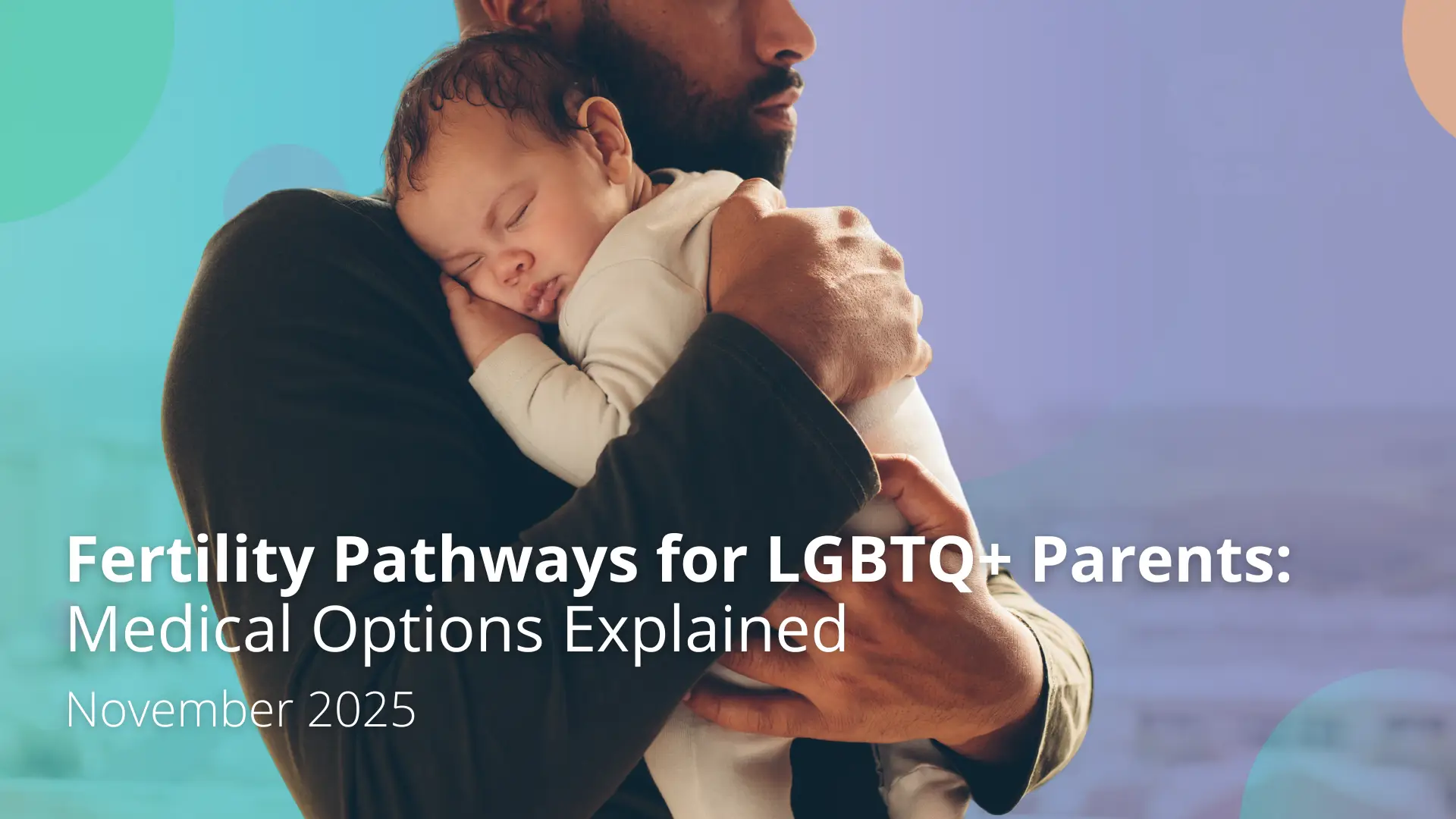

Building a biological family as an LGBTQ+ person can feel confusing, but it doesn’t have to be. In our recent GWK Academy webinar, Executive Director Brian Rosenberg sat down with Dr. Daniel Skora of Fertility Specialists of Texas to break down the main medical paths to parenthood—and what to expect from each.
The biggest takeaway: there is a path for you, no matter your identity, relationship status, or family structure.
IUI: A Simple Starting Point
For many lesbian couples, single parents, or trans men and nonbinary people with ovaries, intrauterine insemination (IUI) is often the first step. It’s relatively low-cost and straightforward: sperm is placed directly into the uterus around ovulation. It may take multiple tries, but it’s a gentle introduction to fertility care.
IVF: The Most Effective Option
In vitro fertilization (IVF) offers the highest success rates and the most flexibility. It’s used by couples pursuing reciprocal IVF, single dads and gay couples using egg donors, or anyone who wants embryo testing or more control over their cycle. IVF is more involved and costly, but it opens the door to many family-building configurations.
Surrogacy for Gay Dads and Beyond
For gay couples, single dads, and trans women, surrogacy is often the way to build a biological family. IVF is used to create embryos, which are then transferred to a gestational carrier. It’s a complex and expensive process, but working with experienced clinics and agencies can make the journey smoother and safer.
Donor Eggs, Sperm, and Embryos
Families may also use donor sperm, donor eggs, or even donated embryos. These options can shorten timelines and reduce costs, especially frozen donor eggs or embryo adoption. Known donors are possible too—they just require medical and legal screening.
Fertility Planning for Trans Parents
Timing matters. Trans men may freeze eggs before starting testosterone, while trans women are encouraged to freeze sperm before beginning estrogen. Still, every situation is unique, and many trans parents build families after transitioning with the right medical support.
Choosing the Right Clinic
Dr. Skora stressed the importance of finding a clinic that genuinely welcomes LGBTQ+ families. Look for clinics with dedicated LGBTQ+ services, strong third-party reproduction experience, and staff who make you feel safe and affirmed. Asking other queer parents in your area can also be invaluable.
The Bottom Line
Every LGBTQ+ person who wants to be a parent deserves the chance—and today, the options are better than ever. With the right guidance, your path to parenthood becomes clearer, more empowering, and absolutely achievable.